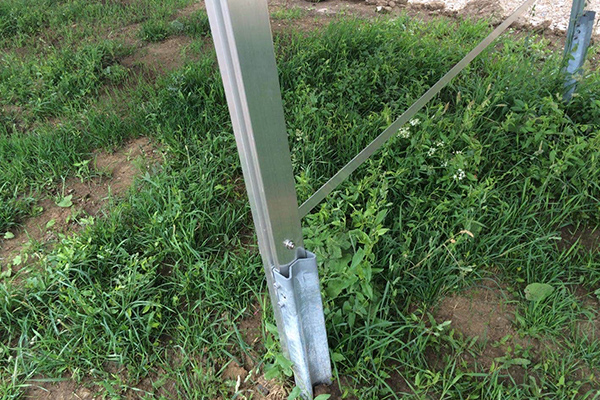
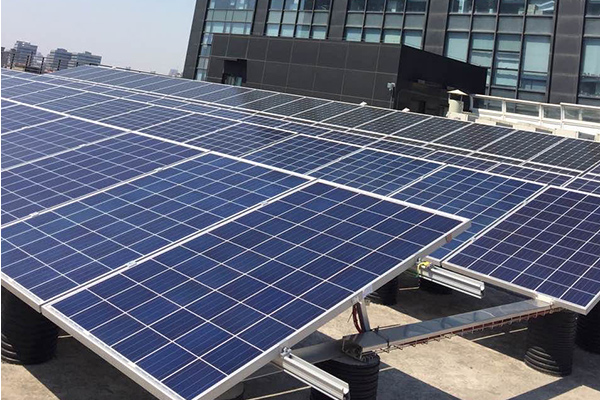
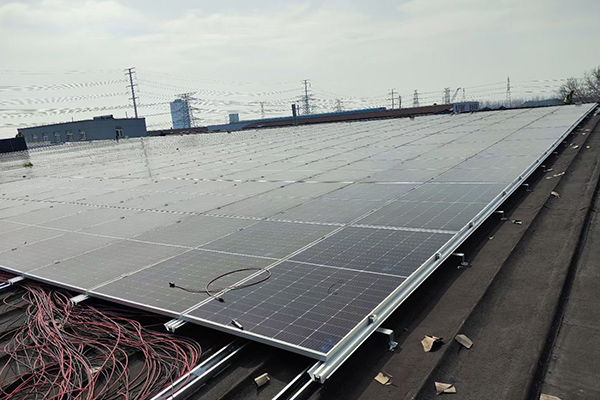
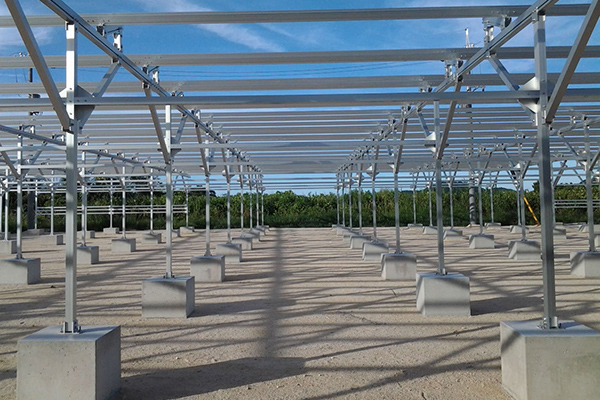
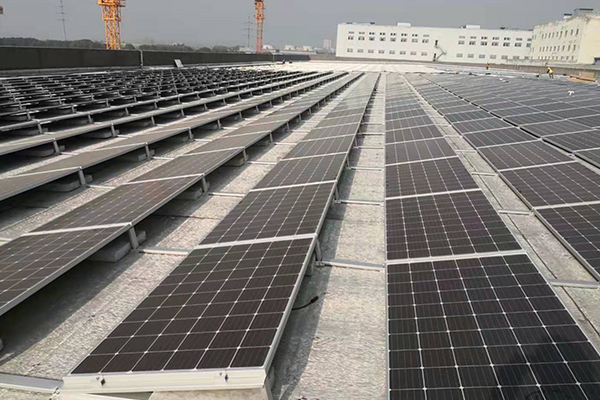
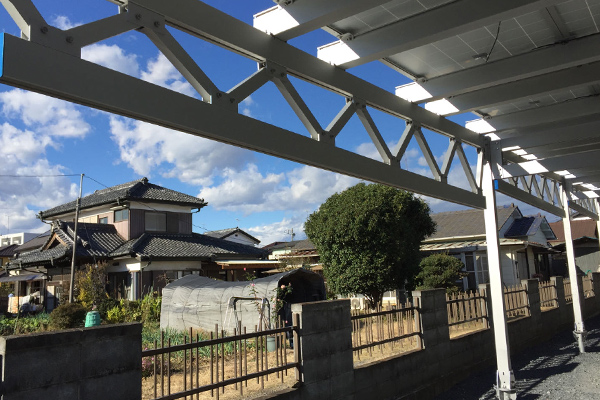
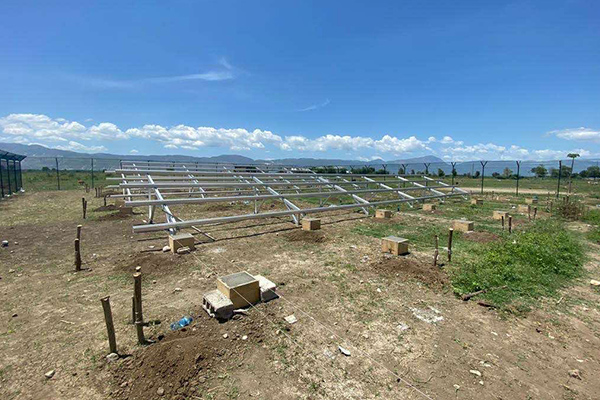
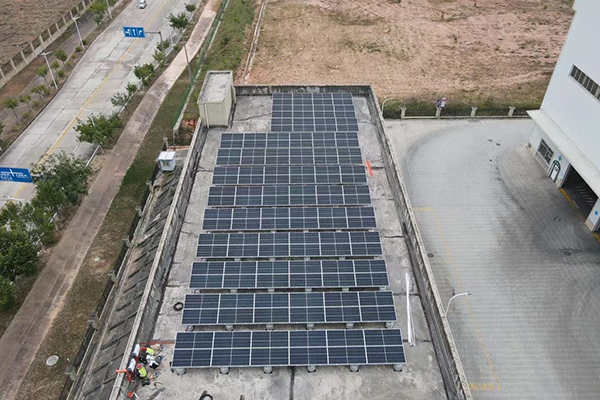
Flat roof solar mounting systems have emerged as a cornerstone of urban solar adoption, addressing the space constraints of cities by leveraging underutilized rooftop areas. Designed for low-slope (1-10°) roofs common in commercial buildings, industrial facilities, and warehouses, these systems balance structural stability, installation flexibility, and energy optimization—critical for maximizing solar project returns.
The core system types cater to diverse roof conditions: Ballasted (non-penetrating) systems use concrete/steel weights to secure arrays without drilling, preserving roof waterproofing and warranty integrity . Ideal for concrete or membrane roofs, they distribute loads evenly (25-40 kg/m²) and support 5-15° tilt angles for optimized sunlight capture . Penetrating (mechanical) systems anchor directly to roof structures via bolts, offering superior wind resistance (up to 180 km/h) for sloped or high-wind zones, though requiring precision waterproof sealing . Hybrid systems combine ballast and penetration for balanced weight efficiency and stability, suitable for seismic-prone regions .
Advanced designs integrate galvanized steel or aluminum components (G90 coating) for corrosion resistance, while adjustable rails enable 10-30° tilt angles—balancing 92-98% peak efficiency with wind load mitigation . Key technical features include compliance with ASCE 7-22 wind standards, 3-axis laser alignment (±1° tolerance), and compatibility with TPO/PVC/metal roofs . Installation is streamlined, with ballasted systems requiring no curing time and penetrating models featuring torque-controlled bolting for consistency .
Beyond space efficiency, these systems drive sustainability by reducing carbon footprints and energy costs. They support scalable deployments—from small commercial arrays to large industrial projects—while minimizing roof disruption. As urban renewable goals accelerate, flat roof solar mounting systems stand as a pragmatic choice, bridging structural safety, installation versatility, and long-term energy productivity for modern built environments.
Category: Haihong
-
Flat Roof Solar Mounting Systems: Efficient, Versatile Solutions for Urban Renewable Energy
-
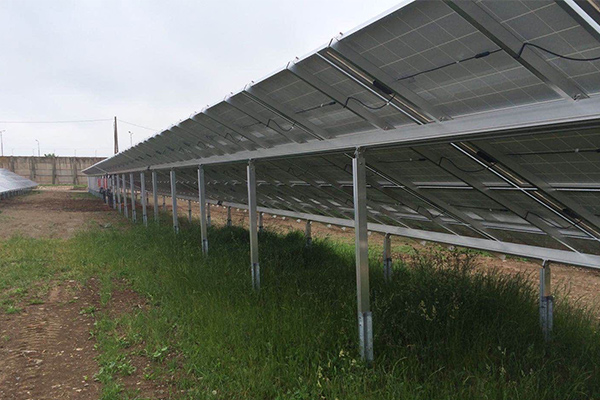
Agricultural Solar Mounting Systems: Merging Energy Production with Farming Efficiency
As global agriculture shifts toward sustainability and cost reduction, agricultural solar mounting systems have emerged as a transformative solution—integrating solar energy generation with farming operations to maximize land value and environmental benefits. These specialized structures support photovoltaic (PV) panels while adapting to the unique demands of agricultural landscapes, addressing both energy needs and farming productivity.
The primary types of agricultural solar mounting systems include ground-mounted fixed systems, tracking systems, agrivoltaic (AV) integrated systems, and roof-mounted variants. Ground-mounted fixed systems, ideal for open farmlands, feature adjustable tilt angles to optimize solar absorption and are designed with sufficient height to accommodate crop growth or livestock grazing. Tracking systems (single-axis or dual-axis) follow the sun’s trajectory, boosting energy output by 15–30% compared to fixed models, suited for large-scale commercial farms. Agrivoltaic systems, a game-changer for land-constrained regions, combine PV panel installation with under-panel farming—supporting shade-tolerant crops while generating clean energy. Roof-mounted systems utilize farm buildings (barns, warehouses) to save land, offering a space-efficient option for small to mid-sized farms.
Modern systems boast agricultural-specific design features: corrosion-resistant materials (hot-dipped galvanized steel, aluminum) to withstand harsh outdoor conditions, modular structures for easy installation and expansion, and compatibility with irrigation systems and farm machinery. Their low-impact design ensures minimal disruption to planting, harvesting, and soil health.
For farmers, these systems deliver multifaceted benefits: reduced electricity costs via on-site power generation, additional revenue from surplus energy sales to grids, and improved land-use efficiency (especially critical in densely populated agricultural regions). They also align with carbon reduction goals, cutting farm emissions while enhancing resilience against volatile energy prices.
As renewable energy policies and agricultural modernization drive demand, agricultural solar mounting systems are becoming indispensable for sustainable farming. By uniting energy production with agricultural productivity, they pave the way for a greener, more profitable future in global agriculture.
-
Solar Brackets for Metal Roofs: Durable, Efficient Solutions for Renewable Energy
Metal roofs have emerged as a top choice for solar installations, thanks to their durability, load-bearing capacity, and long lifespan. At the heart of this synergy lies the solar bracket for metal roofs—an engineered component that bridges roof structures with photovoltaic (PV) modules, combining stability, easy installation, and weather resistance to maximize renewable energy output.
Designed specifically for metal roofing systems (including standing seam, corrugated, and R-panel roofs), these brackets eliminate the need for destructive roof penetration. Instead, they use clamping or fastening mechanisms that secure firmly to metal panels without drilling, preserving roof integrity and preventing leaks. Crafted from high-grade aluminum or galvanized steel, they boast excellent corrosion resistance, withstanding harsh elements like UV radiation, heavy rain, and strong winds—ideal for both residential and commercial applications.
Efficiency is a key advantage. Solar brackets for metal roofs feature adjustable angles, allowing precise alignment of PV modules to capture maximum sunlight. Their lightweight yet robust design reduces roof load while ensuring structural stability, even for large-scale solar arrays on industrial warehouses or commercial buildings. Installation is streamlined too: pre-assembled parts and tool-free adjustments cut down on labor time, lowering project costs and accelerating energy generation.
Compatibility is another highlight. These brackets adapt seamlessly to various metal roof profiles and PV module sizes, offering flexibility for custom solar designs. Whether for a small residential metal roof or a sprawling industrial facility, they provide consistent support, ensuring modules stay securely in place for decades—matching the 25+ year lifespan of most PV systems.
Beyond functionality, these brackets contribute to sustainable energy goals. By enabling efficient solar installation on existing metal roofs, they reduce the need for new construction and maximize the use of available space. Their durable materials also minimize replacement needs, lowering environmental impact while delivering reliable solar power.
For property owners and installers alike, solar brackets for metal roofs represent a smart investment. They combine structural safety, easy installation, and long-term performance, turning metal roofs into high-efficiency solar energy hubs. As the shift to renewable energy accelerates, these specialized brackets stand as a critical solution—proving that metal roofs and solar power are a match made for sustainability.