Find Hot

Enterprise hot news

Category: Trumony

  • Trumony Aluminum Limited: Battery Cold Plate Manufacturer

    As the global electric vehicle (EV) and energy storage markets continue to grow, efficient battery thermal management has become essential for battery safety, performance, and service life. Trumony Aluminum Limited is a professional manufacturer of aluminum battery cold plates and liquid cooling components, providing customized thermal management solutions for EV, ESS, BESS, and other new energy applications.

    Professional Battery Cold Plate Manufacturing

    Headquartered in Suzhou, China, Trumony Aluminum Limited specializes in the R&D, manufacturing, and supply of aluminum battery thermal management components. With standardized production facilities, automated manufacturing equipment, and advanced testing capabilities, Trumony has developed an annual production capacity of approximately 600,000 battery cold plates.

    The company provides cooling solutions for different battery configurations, including prismatic, cylindrical, and pouch cells. Its product portfolio covers stamped cold plates, micro-channel cooling plates, tube-based cooling plates, and integrated liquid cooling plates.

    Advanced Aluminum Cooling Technology

    Trumony uses aluminum alloys and established manufacturing processes such as precision stamping, bending, welding, and vacuum brazing to produce lightweight and high-performance battery cooling components.

    Optimized internal flow channels help distribute coolant evenly across the cooling surface, improving heat transfer and reducing temperature variations within battery packs. Aluminum construction also provides a combination of thermal conductivity, lightweight design, structural strength, and corrosion resistance suitable for demanding battery applications.

    The cooling plates can be customized according to battery pack dimensions, cooling requirements, connection interfaces, nozzle positions, mounting holes, and surface treatment specifications.

    Quality Control and Testing

    Consistent quality is essential for battery thermal management components. Trumony operates according to established quality management procedures covering raw material inspection, process control, dimensional inspection, and finished-product testing.

    The company maintains ISO 9001 and IATF 16949 quality management certifications and conducts relevant tests such as pressure testing, leak testing, dimensional inspection, and thermal performance verification according to product and customer requirements.

    These quality-control processes support consistent product performance from prototype development through mass production.

    Battery Cooling Solutions for EV and ESS

    Trumony’s aluminum cold plates are designed for a wide range of applications, including passenger EVs, commercial electric vehicles, battery energy storage systems (BESS), industrial energy storage, and other high-power battery applications.

    For energy storage systems, Trumony supplies cooling plates for different battery configurations and capacity requirements. For electric vehicles, customized cooling plates can be developed according to battery pack architecture, thermal load, available installation space, and coolant requirements.

    By combining aluminum processing expertise, thermal management engineering, and production capabilities, Trumony supports customers from initial prototype development to volume production.

    Customized Thermal Management Solutions

    Battery thermal management requirements vary significantly between applications. Trumony works with customers to optimize cooling plate structure, flow channels, material selection, connection design, and manufacturing processes according to specific project requirements.

    With professional engineering capabilities, established production processes, and scalable manufacturing capacity, Trumony Aluminum Limited is committed to providing reliable aluminum battery cold plates and liquid cooling components for the global new energy industry.
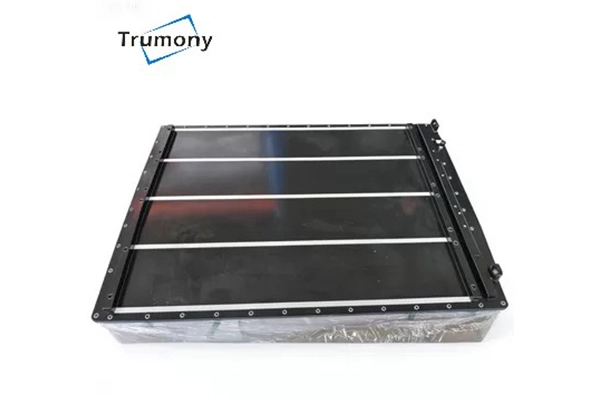


  • 52S ESS Cold Plate for Reliable Energy Storage Thermal Management

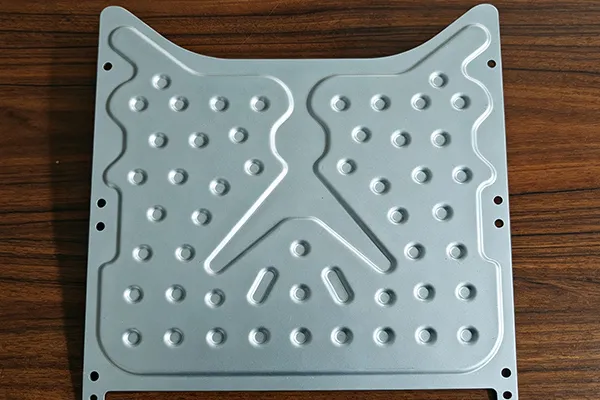
    The 52S ESS Cold Plate is an aluminum liquid cooling component designed for standard 52S battery modules in containerized and commercial energy storage systems. It provides efficient thermal management to support stable battery operation and consistent cooling performance.

    Efficient Cooling Performance

    Manufactured using precision stamping and vacuum brazing, the 52S ESS Cold Plate features optimized internal flow channels that promote uniform coolant distribution and efficient heat transfer. Its low flow resistance helps improve cooling system efficiency under demanding operating conditions.

    Under specified test conditions, the cooling plate can achieve a temperature difference of below 2°C, helping reduce temperature variations across battery modules and supporting more consistent battery performance.

    Reliable Quality and Customization

    Each cooling plate undergoes strict pressure and leak testing to ensure product reliability and sealing performance. The compact structure is designed for integration with mainstream 52S battery packs, while nozzle positions, mounting holes, and surface treatments can be customized according to customer requirements.

    Trumony supports the development and mass production of aluminum liquid cooling components for energy storage applications. From prototype samples to volume production, we provide customized cooling solutions to meet different battery pack designs and thermal management requirements.

    52S-ESS-Cold-Plate.jpg
  • Functions and Structural Advantages of Water Cooling Distribution Plates

    A water cooling distribution plate, also known as a liquid cooling manifold, is an important component in liquid cooling systems. It is widely used in EV batteries, energy storage systems (ESS), data centers, power electronics, and industrial equipment.

    Its main function is to distribute coolant from a main inlet to multiple cooling circuits and collect the return flow, helping achieve balanced coolant distribution and consistent thermal performance.

    How Does It Work?

    The distribution plate uses optimized internal flow channels to divide incoming coolant into multiple branches. By controlling flow rate and pressure across different circuits, it helps prevent uneven cooling and localized hot spots.

    In a battery thermal management system, for example, one manifold can supply coolant to multiple cooling plates or battery modules, creating a more organized and efficient cooling loop.

    Key Advantages

    Balanced Flow Distribution

    Optimized channels help distribute coolant more evenly across multiple cooling units, improving temperature uniformity.

    Low Pressure Drop

    Proper hydraulic design can reduce unnecessary flow resistance and improve overall cooling system efficiency.

    Reduced Leakage Risk

    An integrated structure can reduce the number of pipes, fittings, and connection points, helping minimize potential leakage risks.

    Compact Design

    Compared with conventional pipe-based distribution systems, an integrated manifold can save installation space and simplify system assembly.

    Easy System Integration

    The distribution plate can be customized according to the number of cooling circuits, connection positions, flow requirements, and available installation space.

    Applications in EV and ESS

    As battery packs and BESS platforms become larger and more energy-dense, liquid cooling systems increasingly require reliable flow distribution between multiple cooling units.

    A liquid cooling manifold can connect cooling plates, tubes, pumps, and other thermal management components into a coordinated cooling circuit. Its design directly affects flow balance, pressure drop, system reliability, and maintenance convenience.

    For large-scale ESS applications, modular manifold designs can also simplify installation and support easier inspection or replacement of individual cooling components.

    Trumony Liquid Cooling Solutions

    At Trumony, we provide customized aluminum cooling plates, liquid cooling manifolds, cooling tubes, and related thermal management components for EV, ESS, and other high-power applications.

    Our engineering approach considers thermal performance, flow distribution, pressure drop, leak tightness, structural strength, dimensional accuracy, and system integration.

    As liquid cooling continues to evolve, the distribution manifold is becoming more than a simple coolant splitter. It is an essential part of building a compact, reliable, and efficient thermal management system.

  • 587 ESS Cooling Plate: Key to Stable Energy Storage Operation

    As energy storage systems continue to move toward higher capacity and energy density, effective thermal management is becoming increasingly important for battery safety, performance and long-term reliability.

    Designed specifically for 587Ah large-capacity prismatic battery cells, the 587 ESS Cooling Plate provides an efficient liquid cooling solution for commercial, industrial and utility-scale energy storage systems. By controlling battery temperature and improving temperature uniformity, it helps ESS modules maintain stable performance during demanding charge and discharge cycles.

    Designed for 587Ah High-Capacity Battery Cells

    The 587 ESS Cooling Plate is manufactured from AL3003MOD aluminum alloy, combining high thermal conductivity with lightweight construction, mechanical strength and corrosion resistance.

    The cooling plate is produced using precision stamping and high-temperature vacuum brazing technology. This integrated manufacturing process provides a robust structure and reliable sealing performance, making the plate suitable for continuous operation in demanding ESS environments.

    Its internal coolant channels are carefully designed to promote uniform coolant distribution across the heat-transfer surface, improving heat removal and minimizing localized temperature accumulation.

    Excellent Temperature Uniformity

    For large-capacity battery modules, maintaining consistent cell temperature is critical to overall system performance.

    The 587 ESS Cooling Plate is designed to maintain a temperature difference of less than 2.1°C under specified test conditions. Improved temperature uniformity helps reduce thermal gradients between cells, supporting more consistent battery operation and helping mitigate temperature-related performance degradation over extended operating cycles.

    By providing efficient and balanced heat dissipation, the cooling plate contributes to the overall thermal stability and reliability of the battery module.

    Reliable Quality and Flexible Integration

    To ensure cooling plate reliability, Trumony applies strict quality control procedures, including helium leak detection and pressure testing to verify sealing integrity.

    The cooling plate can also be customized according to different battery module and ESS integration requirements, including:

    · Inlet and outlet positions

    · Flow channel configuration

    · Overall dimensions

    · Interface structure

    · Surface insulation coating

    · Mounting features

    This flexibility allows the 587 ESS Cooling Plate to be integrated into different large-capacity battery module designs.

    A Reliable Cooling Solution for Large-Scale ESS

    Combining AL3003MOD aluminum alloy, optimized coolant channels, precision stamping and vacuum brazing, the 587 ESS Cooling Plate provides a practical balance of thermal performance, structural reliability and integration efficiency.

    For 587Ah battery modules and large-scale ESS applications, reliable liquid cooling can help maintain temperature consistency, support stable battery operation and improve long-term system reliability.

    Trumony provides customized liquid cooling solutions for high-capacity battery modules and energy storage systems, from cooling plate design and tooling to prototyping and mass production.


  • Water Cooling Plate: Efficient Thermal Management for High-Power Applications

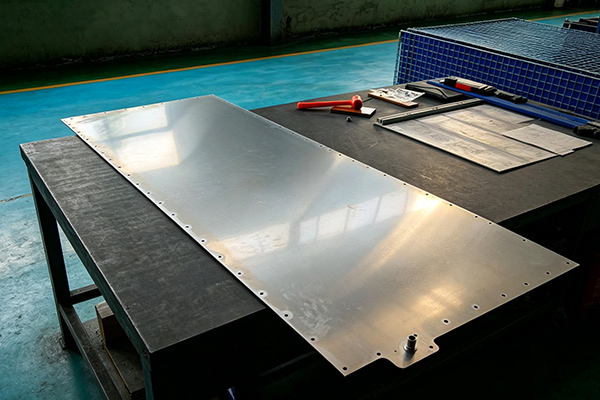
    A water cooling plate, also known as a liquid cold plate, is an efficient thermal management component designed to remove heat from high-power electronic and industrial equipment. By using circulating liquid coolant instead of relying solely on air convection, water cooling plates provide more efficient and uniform heat transfer for applications with high and concentrated heat loads.

    How Does a Water Cooling Plate Work?

    A water cooling plate is typically manufactured from high-thermal-conductivity materials such as aluminum or copper and incorporates precision-engineered internal flow channels. Depending on the application and cooling requirements, these channels can be designed with different geometries to optimize coolant flow, heat transfer performance, and pressure drop.

    During operation, the cooling plate is installed in close thermal contact with heat-generating components such as power electronics, servers, industrial equipment, and new energy vehicle battery cells or modules. Heat is transferred from the component into the cooling plate and then absorbed by the circulating coolant flowing through the internal channels.

    The heated coolant carries the thermal energy away from the heat source and transfers it to a radiator, chiller, or other external heat exchanger. The cooled liquid is then recirculated through the cooling plate, creating a continuous liquid cooling cycle.

    Water-based coolants are particularly effective because of their relatively high specific heat capacity, allowing them to absorb a significant amount of thermal energy with a relatively small temperature increase.

    Key Advantages of Water Cooling Plates

    Compared with conventional air-cooled heat sinks and fans, liquid cooling plates offer several important advantages for high-power thermal management.

    High Heat Transfer Efficiency

    Liquid coolant can transfer heat much more effectively than air, making water cooling plates suitable for high heat flux and high-power applications. Efficient heat removal helps maintain components within their target operating temperature range.

    Uniform Temperature Control

    A properly designed internal channel structure distributes cooling across the heat-generating area, helping reduce temperature differences and minimize localized hot spots. This is particularly important for battery thermal management, where excessive temperature variation can affect performance, aging, and safety.

    Compact and Space-Efficient Design

    Liquid cooling provides higher heat removal capability within a relatively compact footprint. This enables cooling systems to meet increasingly demanding thermal requirements without significantly increasing equipment size.

    Low Operating Noise

    Unlike systems that depend heavily on high-speed fans, liquid cooling plates can operate with significantly less airflow-related noise. This makes them suitable for applications where acoustic performance is important.

    Flexible Design and Integration

    Water cooling plates can be customized in terms of dimensions, flow channels, inlet and outlet locations, mounting features, material selection, and thermal interface requirements. This allows them to be integrated into a wide range of equipment and battery architectures.

    Applications of Water Cooling Plates

    Water cooling plates are widely used in applications where conventional air cooling cannot provide sufficient thermal performance.

    Typical applications include:

    · Electric vehicle battery packs

    · Energy storage systems (ESS)

    · Data centers and high-performance computing

    · Power electronics and IGBT modules

    · Industrial laser systems

    · Welding and power conversion equipment

    · High-power semiconductor devices

    · Other high-heat-flux industrial equipment

    For EV and ESS battery packs, liquid cooling plates can be installed beneath, between, or alongside battery cells depending on the battery architecture. The cooling structure can be engineered to provide consistent thermal performance while meeting requirements for pressure resistance, leak tightness, weight, and packaging space.

    Water Cooling Plate Manufacturing and Performance

    The performance of a liquid cold plate depends not only on the coolant but also on the design and manufacturing quality of the plate itself. Important engineering considerations include thermal conductivity, channel geometry, coolant flow rate, pressure drop, contact area, flatness, leak tightness, and structural strength.

    For aluminum cooling plates, manufacturing processes such as stamping, extrusion, machining, vacuum brazing, and friction stir welding can be selected according to the required structure and production volume.

    For battery thermal management applications, additional requirements may include:

    · Low temperature difference across the cooling surface

    · Controlled coolant flow distribution

    · Low pressure drop

    · High air/water tightness

    · Resistance to internal pressure

    · Dimensional and flatness control

    · Compatibility with battery pack assembly processes

    A well-engineered cooling plate therefore needs to balance thermal performance, hydraulic performance, mechanical reliability, manufacturability, and cost rather than simply maximizing heat transfer.

    Water Cooling Plates for EV and ESS Battery Thermal Management

    As battery energy density and charging power continue to increase, effective thermal management has become increasingly important for electric vehicles and energy storage systems.

    In EV battery packs, liquid cooling plates help control battery temperature during high-current charging, acceleration, and other demanding operating conditions. In large-scale ESS applications, cooling plates help maintain consistent cell temperatures across battery modules, supporting reliable operation and long-term system performance.

    For these applications, the cooling plate is not simply a heat dissipation component. It is an integral part of the battery thermal management system (BTMS) and must be designed together with the battery cell configuration, coolant circuit, module structure, and overall pack architecture.

    Conclusion

    Water cooling plates provide an efficient and compact solution for thermal management in high-power applications. By combining high-performance liquid heat transfer with optimized channel design and application-specific engineering, liquid cold plates can effectively control operating temperatures, reduce thermal stress, and improve the reliability of modern electronic, automotive, and energy storage systems.

    For EV batteries, ESS, power electronics, and other high-heat-load applications, selecting the appropriate water cooling plate design, material, manufacturing process, and coolant configuration is essential to achieving reliable long-term thermal performance.

    Water Cooling Plate.jpg


  • 104S ESS Cold Plate: Optimized Liquid Cooling for Large-Scale Energy Storage

    As grid-scale energy storage systems continue to evolve toward higher energy density, greater capacity and longer service life, effective thermal management has become essential for maintaining battery safety, performance and reliability.

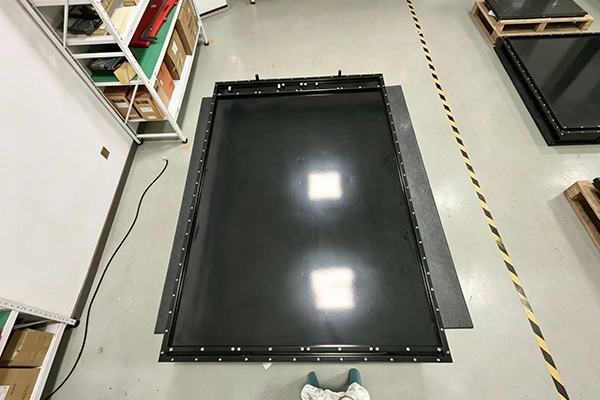
    Designed specifically for 1P104S high-voltage battery modules, the 104S ESS Cold Plate provides a reliable liquid cooling solution for containerized, commercial and utility-scale energy storage systems.

    Designed for 1P104S High-Voltage Battery Modules

    The cold plate is manufactured from high-thermal-conductivity AL3003MOD aluminum alloy and produced using precision stamping and high-temperature brazing processes.

    This manufacturing approach combines:

    High thermal conductivity

    Lightweight construction

    Strong mechanical rigidity

    Excellent corrosion resistance

    Reliable long-term performance

    The internal flow channels are engineered and optimized through thermal and fluid-flow simulation to promote uniform coolant distribution across the entire heat-transfer surface, helping minimize localized heat accumulation.

    Stable Temperature Control Under 0.5C Conditions

    Thermal performance is critical for large-capacity ESS battery modules.

    Under standard 0.5C charge-discharge conditions, the 104S ESS Cold Plate keeps the maximum cell temperature below 35°C, while maintaining a module-wide temperature difference of less than 2°C.

    Excellent temperature uniformity helps reduce thermal gradients between cells, supporting more consistent battery operation and helping mitigate temperature-related degradation over long operating cycles.

    Simplified Integration for ESS Applications

    The 104S ESS Cold Plate features standardized dimensions and robust flange-type fluid interfaces, simplifying module assembly and system-level integration.

    Depending on project requirements, additional surface treatments can also be provided for electrical insulation and enhanced corrosion protection, making the cooling plate suitable for demanding outdoor ESS environments.

    Reliable Cooling for Large-Scale ESS

    By combining optimized flow-channel design, AL3003MOD aluminum alloy, precision stamping and high-temperature brazing, the 104S ESS Cold Plate delivers a balance of thermal performance, structural reliability and integration efficiency.

    For megawatt-level energy storage systems, reliable temperature control can contribute to safer operation, improved battery performance and lower long-term maintenance requirements.

    Trumony provides customized liquid cooling solutions for high-capacity battery modules, helping ESS manufacturers meet the evolving thermal management requirements of next-generation energy storage systems.

    104S-ESS-Cold-Plate.jpg
  • Water Cooling Distribution Plate: A Key Component for Efficient Thermal Management

    A water cooling distribution plate is a key component in modern liquid cooling systems, widely used in high-performance computing, data centers, power electronics and new energy applications.

    As a centralized flow distribution unit, it replaces complex pipeline arrangements and provides a compact and efficient way to distribute coolant throughout the thermal management system.

    How Does a Water Cooling Distribution Plate Work?

    The primary function of the distribution plate is to divide coolant from a common inlet into multiple independent flow paths.

    Through precisely designed internal channels, the plate helps balance coolant flow and pressure across different cooling modules, such as CPU, GPU and cold plates. More uniform coolant distribution helps reduce localized overheating and maintain consistent heat dissipation across the system.

    Key Advantages

    Compared with conventional pipe-based connections, a water cooling distribution plate offers several advantages:

    · Uniform coolant distribution through optimized internal channels

    · Compact system design by integrating multiple flow paths into one component

    · Reduced piping complexity for cleaner and easier system integration

    · Lower pressure loss through optimized flow channel design

    · Lightweight and durable construction using materials such as aluminum or acrylic

    · Flexible interfaces for easier installation and system compatibility

    Applications in Advanced Cooling Systems

    Water cooling distribution plates are particularly valuable in applications where high heat loads, limited installation space and precise flow control are critical.

    They can be integrated into liquid cooling systems for data centers, high-performance computing, power electronics, battery systems and other high-power equipment, helping improve thermal stability and overall system reliability.

    As computing power and equipment power density continue to increase, efficient coolant distribution is becoming an increasingly important part of modern thermal management.

    Trumony provides customized liquid cooling components designed around the flow, structural and integration requirements of your system.

    Water-Cooling-Distribution-Plate.jpg
  • 587 ESS Cooling Plate: High-Performance Liquid Cooling for Large-Scale Energy Storage

    As energy storage systems move toward higher capacity, higher energy density and faster charge-discharge rates, efficient thermal management has become essential for battery safety, performance and long-term reliability.

    Designed specifically for 587Ah high-capacity prismatic cells, the 587 ESS Cooling Plate provides an efficient liquid cooling solution for utility-scale and containerized energy storage systems.

    Optimized for 587Ah ESS Battery Cells

    Manufactured from high-thermal-conductivity 3003-series modified aluminum alloy, the cooling plate is produced using precision stamping and high-temperature vacuum brazing technology.

    The integrated brazed structure provides:

    · Excellent thermal conductivity

    · High structural rigidity

    · Reliable sealing performance

    · Good corrosion resistance

    · Consistent long-term cooling performance

    The internal flow channel is optimized to promote uniform coolant distribution across the battery contact area, helping minimize localized heat accumulation and maintain excellent cell-to-cell temperature consistency, with a measured temperature difference of less than 2.1°C under specified test conditions.

    Efficient Thermal Management for Safer ESS Operation

    Uniform temperature control helps reduce thermal gradients and thermal stress within battery cells, supporting more stable battery operation and helping slow performance degradation over extended operating cycles.

    To ensure reliable performance, Trumony applies strict quality control procedures, including helium leak detection and hydraulic pressure testing, helping verify the sealing integrity of each cooling plate before delivery.

    Flexible Customization for Different ESS Designs

    The 587 ESS Cooling Plate can be customized according to specific battery pack and module requirements, including:

    · Inlet and outlet positions

    · Flow channel configuration

    · Surface insulation coating

    · Interface structure

    · Overall dimensions and mounting features

    This flexibility enables easier integration into different battery module and ESS architectures.

    Reliable Liquid Cooling by Trumony

    Combining high-performance aluminum materials, precision stamping, vacuum brazing and professional thermal management expertise, the 587 ESS Cooling Plate is engineered to deliver stable and efficient cooling for large-capacity energy storage applications.

    From 587Ah battery modules to utility-scale ESS, Trumony provides liquid cooling solutions designed around the thermal, structural and integration requirements of modern energy storage systems.

    Trumony Aluminum — Your Liquid Cooling Expert for Battery Thermal Management.

    energy-storage-systems.jpg
  • The Importance of EV Battery Cooling Systems

    The battery cooling system is a critical component of an electric vehicle’s (EV) thermal management system, directly influencing battery performance, lifespan, and overall driving safety. As the primary power source for modern EVs, lithium-ion batteries are highly sensitive to temperature fluctuations. Excessive heat accelerates battery degradation and increases the risk of thermal runaway, while low temperatures reduce battery activity, resulting in lower power output and shorter driving range. Therefore, maintaining the battery within its optimal operating temperature range of 25°C to 40°C is essential for achieving reliable performance and long-term durability.

    Modern EV battery cooling systems generally fall into three categories: air cooling, liquid cooling, and direct cooling. Air cooling uses fans to circulate air around the battery pack, offering a simple, lightweight, and cost-effective solution that is commonly adopted in entry-level electric vehicles. Liquid cooling, currently the industry’s most widely used technology, circulates coolant through channels or cold plates integrated into the battery pack to efficiently remove heat generated during charging and discharging. Compared with air cooling, liquid cooling provides more uniform temperature distribution, higher cooling efficiency, and greater temperature control accuracy, making it the preferred choice for high-performance and long-range EVs.

    An efficient battery cooling system delivers several key benefits. By minimizing temperature differences between individual battery cells, it reduces uneven aging and extends the service life of the entire battery pack. Effective thermal management also enables fast charging by dissipating the significant heat generated during high-power charging, improving both charging efficiency and operational safety. Furthermore, under demanding conditions such as high ambient temperatures, aggressive driving, or prolonged operation, a reliable cooling system helps prevent overheating and ensures stable battery performance.

    As the electric vehicle industry continues to advance, battery energy density, charging power, and vehicle performance are steadily increasing, placing even greater demands on thermal management technologies. Intelligent battery cooling systems featuring precise temperature control, adaptive thermal management, and improved energy efficiency are becoming a major focus of future development. Without question, advanced battery cooling systems will remain a fundamental technology for ensuring the safety, reliability, and long-term performance of next-generation electric vehicles.

  • 52S Cooling Plate: High-Efficiency Thermal Management Solution for Advanced Energy Systems

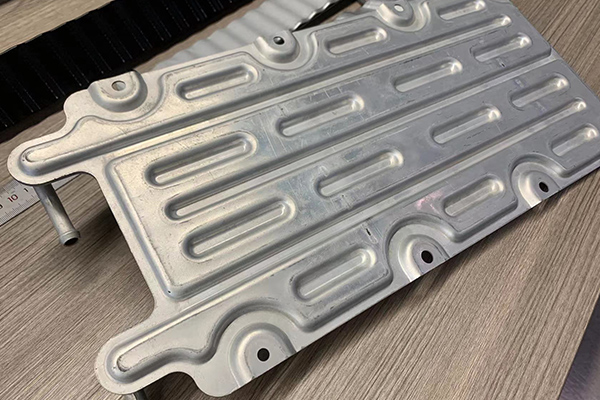
    The 52S Cooling Plate is a high-performance liquid cooling component designed for battery energy storage systems (BESS) and electric vehicle (EV) battery modules. Manufactured from high-strength aluminum alloy and produced using advanced stamped and brazed forming technology, it combines lightweight construction, excellent thermal conductivity, and superior mechanical strength to deliver reliable thermal management for modern energy applications.

    As battery systems continue to increase in energy density and power output, effective heat dissipation has become essential for ensuring safety, performance, and longevity. The 52S Cooling Plate is specifically engineered to address heat accumulation during charging and discharging cycles, helping maintain optimal operating temperatures even under demanding conditions.

    Its precision-engineered internal liquid cooling channels enable highly efficient heat transfer. As coolant circulates through the micro-channel structure, heat generated by prismatic battery cells is rapidly absorbed and transferred away from the battery module. The optimized flow path design ensures uniform temperature distribution across the entire cooling plate, minimizing thermal gradients and preventing localized overheating that could compromise battery performance or reduce service life.

    Designed for durability and flexibility, the 52S Cooling Plate undergoes rigorous pressure and leak testing to ensure long-term sealing reliability and stable operation. Its customizable dimensions and adaptable mounting configurations allow seamless integration into a wide range of battery pack architectures for both energy storage and electric mobility applications.

    Compared with conventional air-cooling solutions, liquid cooling technology offers significantly higher heat dissipation efficiency, improved temperature consistency, and lower overall energy consumption. These advantages contribute to enhanced battery safety, longer cycle life, and improved system performance.

    The 52S Cooling Plate provides a dependable thermal management solution for next-generation energy systems, supporting the industry’s growing demand for safer, more efficient, and longer-lasting battery technologies.

    52S-Cooling-Plate.jpg