Find Hot

Enterprise hot news

Category: CENTERSKY

  • A Brief Discussion on the Application of Silicon Steel Sheets in Transformers

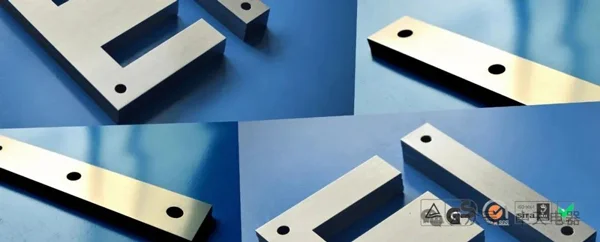
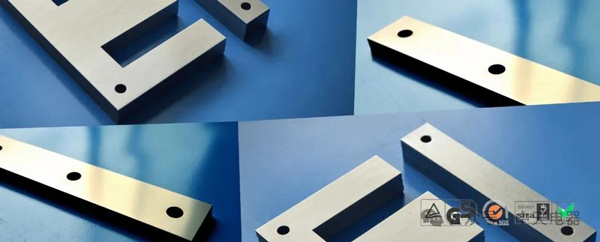
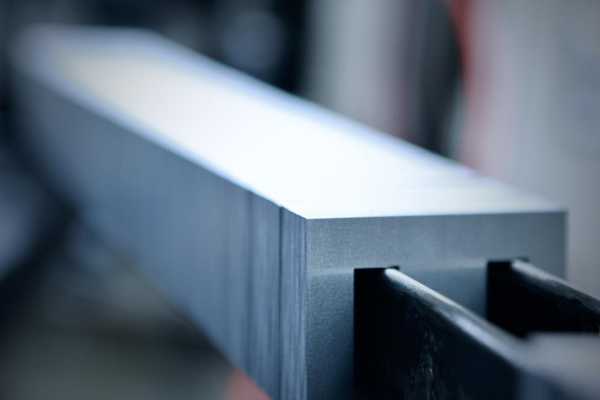
    Silicon steel sheets, also known as silicon steel plates, are an indispensable magnetic material in the electrical engineering field. They are refined from electrical silicon steel with a silicon content of 0.8%-4.8% through hot and cold rolling processes, and are typically no more than 1 mm thick, hence the name “thin sheet.” Broadly speaking, silicon steel sheets belong to the category of sheet metal, but they are classified as a separate category due to their unique electrical properties and wide range of applications. Whether in the power, telecommunications, or instrumentation industries, silicon steel sheets play a crucial role, serving as a key material for ensuring the efficient and stable operation of equipment.

    silicon-steel-sheets

    Most commonly used transformer cores are made of silicon steel sheets. Silicon steel is a type of steel containing silicon, with its silicon content controlled within the range of 0.8% to 4.8%. The primary reason for choosing silicon steel as the transformer core material is its excellent magnetic permeability. In a energized coil, silicon steel can generate a strong magnetic induction intensity, thereby enabling a reduction in transformer size. In practical applications, transformers always operate under alternating current. Besides power losses caused by coil resistance, the core also experiences power losses under the magnetization effect of alternating current, commonly referred to as “iron losses.” These iron losses mainly originate from two factors: “hysteresis losses” and “eddy current losses.”
    Hysteresis losses are losses generated during the magnetization process of the core due to hysteresis. Their magnitude is closely related to the area enclosed by the hysteresis loop of the material. Fortunately, the hysteresis loop of silicon steel is relatively narrow, so using silicon steel as the transformer core can significantly reduce hysteresis losses, thereby greatly reducing the heat generated by the core.
    However, the aforementioned advantages of silicon steel do not mean that we can directly use a single piece of silicon steel to make the core. To further reduce another type of iron loss—eddy current loss—the iron core is machined into a sheet shape. This sheet structure can effectively reduce eddy current loss and further improve the efficiency of the transformer.

    silicon-steel-sheet

    During transformer operation, the alternating current in its coils generates alternating magnetic flux. This changing magnetic flux induces current in the iron core, which circulates in a plane perpendicular to the direction of the magnetic flux, known as eddy currents. Eddy current losses also cause the iron core to heat up. To reduce these losses, the transformer core is typically made of stacked silicon steel sheets that are insulated from each other. This allows eddy currents to pass through a smaller cross-section in a narrow loop, thus increasing the resistance in the eddy current path. Simultaneously, the silicon element in the silicon steel increases the material’s resistivity, further contributing to reducing the effects of eddy currents.

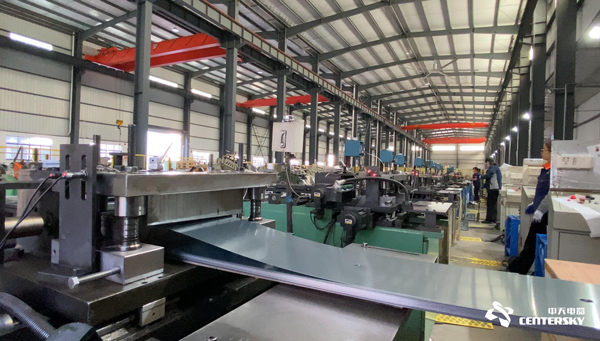
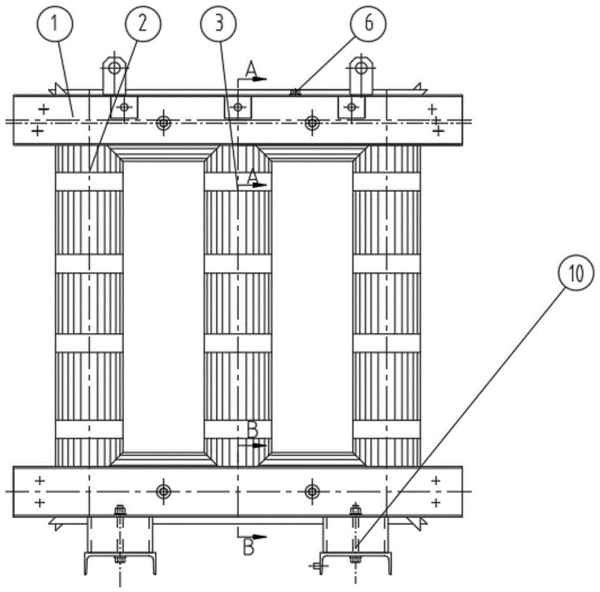
    Transformer cores are typically made of cold-rolled silicon steel sheets with a thickness of 0.35mm or the design requirement. These sheets are cut into long strips according to the required core dimensions and then stacked into a “日” (sun) or “口” (mouth) shape. Theoretically, the thinner the silicon steel sheets and the narrower the spliced ​​strips, the better the effect on reducing eddy currents. This not only reduces eddy current losses and temperature rise but also saves on silicon steel material.
    In actual manufacturing, other factors also need to be considered. Simply pursuing the aforementioned effects might increase manufacturing time and reduce the effective cross-section of the core. Therefore, when manufacturing silicon steel sheet cores, we need to comprehensively consider various factors, weigh the pros and cons, and choose the most suitable size.
    Transformers operate based on the principle of electromagnetic induction. Two windings are wound on a closed core column: a primary winding and a secondary winding. When an AC power supply voltage is applied to the primary winding, an alternating current is generated, thus establishing a magnetomotive force (MOF). Under the influence of this MOF, an alternating main magnetic flux is generated in the core.
    Transformers can perform voltage step-up and step-down functions, which are based on profound physical principles. Lenz’s law reveals the mystery: when the alternating current in the primary winding generates a magnetic flux, it attempts to oppose the change in the original magnetic flux. Specifically, when the original magnetic flux increases, the magnetic flux generated by the induced current will be in the opposite direction to the original magnetic flux. In this way, a low-level alternating voltage is generated in the secondary winding, whose induced magnetic flux cancels out the main magnetic flux of the primary winding. The core, as the magnetic circuit core of the transformer, plays a crucial role.

    silicon-steel-plates

    1. Classification of Silicon Steel Sheets
    Silicon steel sheets can be broadly classified into two categories based on their silicon content: low-silicon and high-silicon. Low-silicon steel sheets, with a silicon content below 2.8%, possess a certain mechanical strength and are commonly used in motor manufacturing, hence the industry term “motor silicon steel sheets.” High-silicon steel sheets, with a silicon content between 2.8% and 4.8%, offer excellent magnetic properties but are more brittle, thus primarily used in transformer core manufacturing, and are known as “transformer silicon steel sheets.” It’s worth noting that there isn’t an absolute boundary between these two types of silicon steel sheets in practical applications; high-silicon steel sheets are also frequently used in the manufacture of large motors.
    2. Processing Technology of Silicon Steel Sheets
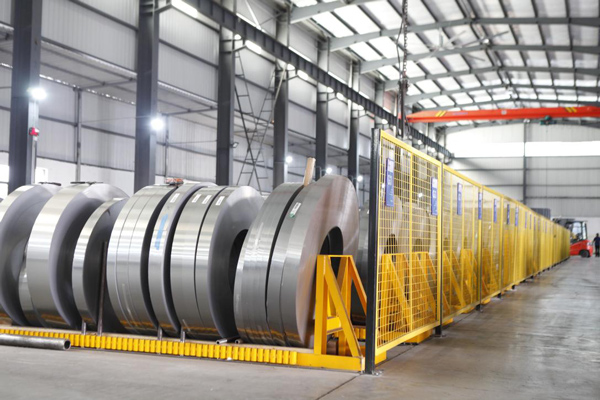
    The main processing technologies for silicon steel sheets include hot rolling and cold rolling. Cold rolling is further subdivided into non-oriented and grain-oriented types. Cold-rolled silicon steel sheets are renowned for their uniform thickness, superior surface quality, and high magnetic properties. With the continuous advancement of industrial technology, hot-rolled silicon steel sheets are gradually being replaced by cold-rolled silicon steel sheets. In particular, my country has clearly put forward a policy to stop using hot-rolled silicon steel sheets, namely the so-called “cold-rolled instead of hot-rolled” strategy.

    transformers-core

    3. Performance Indicators of Silicon Steel Sheets

    a. Low Iron Loss: This is a key indicator of silicon steel sheet quality. Globally, countries classify silicon steel sheets based on iron loss values; lower iron loss corresponds to a higher grade and, consequently, superior product quality.

    b. High Magnetic Induction Intensity: Under the same magnetic field conditions, silicon steel sheets with high magnetic induction intensity can generate higher magnetic flux density. This allows for a reduction in the size and weight of the manufactured motor or transformer core, thus saving resources such as silicon steel sheets, copper wire, and insulation materials.

    c. High Stacking Factor: The smoothness, flatness, and thickness uniformity of the silicon steel sheet surface directly affect the stacking factor of the core. Silicon steel sheets with excellent surface quality naturally have a higher stacking factor.

    d. Good Stamping Properties: This is particularly important for manufacturing cores for small and micro motors, as it directly affects the core manufacturing process and yield.

    e. Good Adhesion and Weldability of the Surface to the Insulating Film: This is a crucial guarantee for ensuring that the silicon steel sheet maintains good performance during subsequent processing and use. 6. Magnetic aging. This refers to the ability of silicon steel sheets to maintain stable magnetic properties after a period of use, without significant degradation.

    f. Annealing and pickling treatment. Silicon steel sheets must undergo annealing and pickling processes before leaving the factory to ensure their performance and quality meet standard requirements.

  • Market Research and Development Trends of Oriented Silicon Steel Industry

    Market Research and Development Trends of Oriented Silicon Steel Industry

    Analysis and Forecast of Downstream Sub-market Applications in the Grain-Oriented Silicon Steel Industry
    China’s steel industry has entered a stage of fierce competition for existing market share. In 2023, crude steel production reached 1.005 billion tons, and steel product output reached 1.4 billion tons, representing a year-on-year increase of 1.1%. Driven by technological and industrial revolutions, the steel industry is accelerating structural upgrading and developing towards mid-to-high-end products. On the consumption side, demand for construction steel has declined, while demand for high-quality special steels such as medium and heavy plates, automotive steel sheets, and silicon steel has increased. High-end steel will become the main focus of future development, and grain-oriented silicon steel is expected to become a key development area for the steel industry.
    Analysis of the supply situation of my country’s grain-oriented silicon steel industry
    Silicon steel is an indispensable soft magnetic alloy material for national industry, agriculture, transportation, national defense, and people’s daily lives. It is the cornerstone of the green, low-carbon, and efficient development of the power industry and a key material for upgrading various electrical products. It is widely used in industrial motors, home appliances, new energy vehicles, transformers, and other fields.
    Gross-oriented silicon steel, due to its high magnetic permeability, low coercivity, and high resistivity, is widely used in various types of transformers, including main transformers, distribution transformers, and dry-type transformers, primarily in the transformer (core) manufacturing industry. The manufacturing technology of oriented silicon steel is highly complex and has a narrow process window. Especially for high-grade, high-magnetic-induction oriented silicon steel, the technological barriers are extremely high, representing the highest level of steel manufacturing and being hailed as the “crown jewel” of steel products.
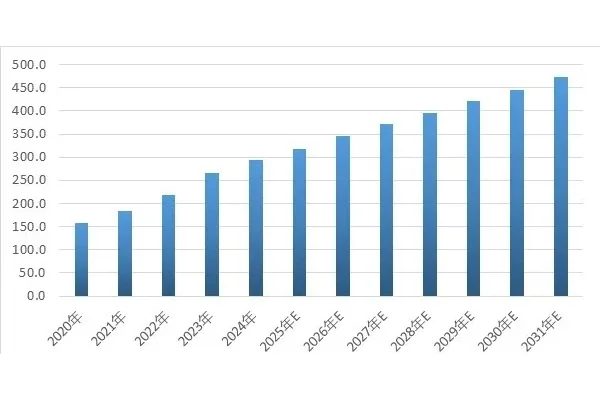
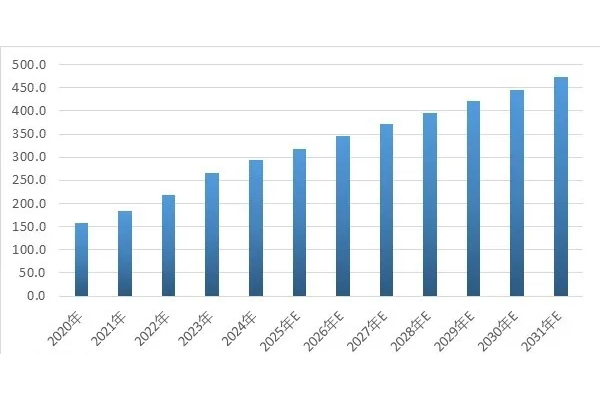
    With the promotion and implementation of the national “dual-carbon” strategy and the continuous progress of electrification and intelligentization in society, the international and domestic markets for medium- and high-grade non-oriented silicon steel and high-magnetic-induction oriented silicon steel have shown a long-term stable growth trend. In recent years, my country’s grain-oriented silicon steel production has continued to grow, reaching 2.6502 million tons in 2023, accounting for 17.35% of total silicon steel production. Among them, high magnetic induction grain-oriented silicon steel (HiB) accounted for 59% of the production, while general grain-oriented silicon steel (CGO) accounted for 41%.

    Analysis and Forecast of my country’s Grain-Oriented Silicon Steel
    Production from 2020 to 2031

    Silicon-Steel-Industry
    In 2025, China is expected to add 6 new grain-oriented silicon steel production lines, increasing capacity by 700,000 tons, mainly concentrated in North China and Central China.
    Analysis and Forecast of Downstream Sub-application Areas in the Oriented Silicon Steel Industry
    As a key raw material for transformers, reactors, instrument transformers, and other voltage regulation and transformation equipment, the development of grain-oriented silicon steel carries the green mission of energy conservation and emission reduction, and is one of the important supports for implementing the national “dual-carbon” strategy. With the support of national strategies and policies, high-quality grain-oriented silicon steel will have good development potential.

    (1) Conventional Transformers
    Driven by national energy policies, China’s smart grid construction has entered a new stage, and the intelligent transformation of distribution transformers is accelerating. The State Grid plans to transform 294,800 distribution transformers during the 14th Five-Year Plan period, and the Southern Power Grid has invested 187 billion yuan in rural power grid transformation and upgrading. Transformer power loss accounts for about 40% of the transmission and distribution process. In 2023, China’s transformer power loss was approximately 240 billion kWh, generating 236 million tons of CO2 emissions. Upgrading the grade of grain-oriented silicon steel will help upgrade transformer energy efficiency, reduce power loss, improve energy utilization efficiency, and contribute to carbon emission reduction.

    (2) Ultra-High Voltage Projects
    With the accelerated construction of wind and photovoltaic power generation bases, ultra-high voltage transmission has become a key solution to the problems of new energy grid connection and cross-regional power transmission. The State Grid Corporation of China plans to invest 380 billion yuan in ultra-high voltage (UHV) power transmission projects during the 14th Five-Year Plan period, with UHV equipment investment accounting for 25%, of which transformer equipment investment is close to 100 billion yuan. This will drive demand for supporting equipment and further increase consumption of grain-oriented silicon steel.

    (3) New Energy Power Generation
    It is estimated that by the end of the 14th Five-Year Plan period, wind power and photovoltaic installed capacity will reach 599 million kW and 763 million kW, respectively. By 2030, wind power and photovoltaic installed capacity will reach 800 million kW and 1.025 billion kW, respectively, and by 2050, they will reach 2.2 billion kW and 3.45 billion kW, respectively. New energy power generation requires a large number of transformers; a 1GW wind power or photovoltaic base requires 500 transformers. It is estimated that by 2025, the investment in the new energy transformer market will exceed 120 billion yuan, and by 2035, it will exceed 1 trillion yuan. With the future trend of a significant increase in wind power and photovoltaic installed capacity, transformers and upstream grain-oriented silicon steel will also experience explosive growth. In summary, transformers, as key equipment for power generation and transmission, are the most important downstream industry for grain-oriented silicon steel, with silicon steel costs accounting for approximately 30% to 40% of the production cost of a single transformer. With the implementation of ultra-high voltage projects across China, the transformer market is showing a growth trend, and the significant increase in power transformer production will drive the growth in demand for grain-oriented silicon steel.

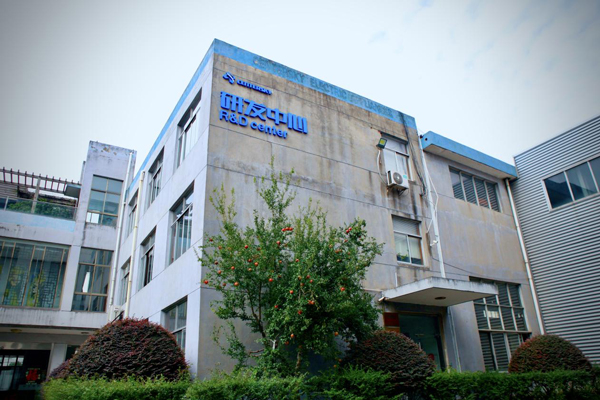
  • Innovation-Driven Development Towards High-Quality Development —A Record of the R&D Center Upgrade

    Innovation-Driven Development Towards High-Quality Development —A Record of the R&D Center Upgrade

    silicon-steel-sheets
    I.Background of R&D Center Upgrade
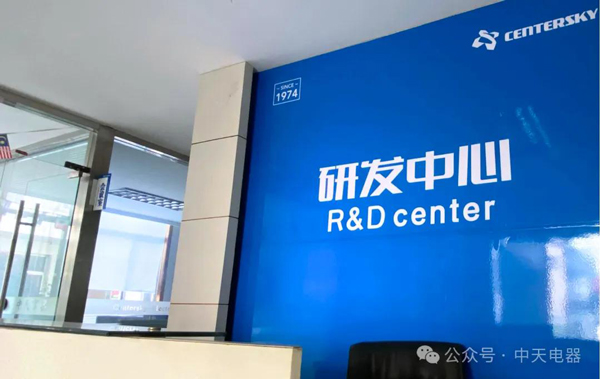
    In recent years, with the country’s emphasis on high-quality innovation and development in the manufacturing industry, and the increasing global demand for environmental protection, energy conservation, and intelligent technologies, Jiangyin Centersky Electrical Appliance Co., Ltd, a long-established manufacturer of electromagnetic silicon steel sheets, has deeply recognized the importance of technological research and development. In recent years, the company has invested in and continuously upgraded its R&D center, gradually improving its technological innovation capabilities and market competitiveness, keeping up with domestic and international market demands, and promoting the company’s high-quality development in the electrical industry.

    II. Upgrade Content of R&D Center

    silicon-steel-sheet

    1.Hardware infrastructure upgrades and talent development:
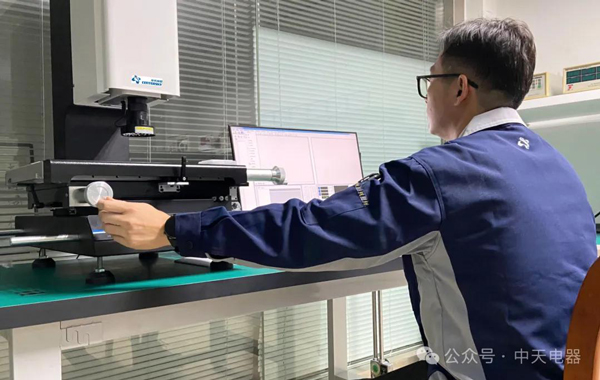
    To better meet market demands, improve product performance, and provide more efficient services to customers, the company has successively introduced several advanced domestic equipment platforms, including high-precision testing instruments and automated testing equipment, to improve experimental R&D efficiency. Simultaneously, it is continuously equipping its R&D laboratories with more advanced supporting equipment for the R&D and testing of new products and processes.
    The company is also gradually increasing its efforts in talent recruitment, hiring more professional and technical personnel with an international perspective and high levels of expertise, and cultivating more outstanding R&D talent through cooperation with universities and research institutions. Currently, technical personnel account for 26% of the company’s total workforce, and employees with college degrees or above account for 38%.

    Digital Transformation:

    electrical steel sheet

    Leveraging modern information technologies such as the internet and big data, the company has achieved fully digital management of the entire R&D and production process. Through real-time network scheduling, the company has achieved precise interaction across all departments, including design and R&D, production, quality inspection, warehousing, and logistics. Paperless IoT real-time monitoring allows for comprehensive and seamless control from raw material to finished product, breaking the traditional production model and greatly improving efficiency and quality from R&D to production.

    III. Keep up with policy trends

    In recent years, Centersky has actively integrated into national strategies, committed to developing new energy-saving and environmentally friendly technologies, and focusing on products such as rail transit and special electrical equipment. The company continues to drive technological innovation in areas such as industrial power transmission and distribution automation systems, power transformers, and special transformer systems, further enhancing its competitiveness in the international market.

    silicon steel

    Going forward, Centersky will continue to invest in and upgrade its production and R&D, enabling it to take solid and powerful steps on the path of technological innovation and high-quality development. Adhering to the development philosophy of “Sincerity and Expertise,” the company strives to become a benchmark enterprise in the industry through continuous technological innovation and management optimization.

  • CENTERSKY‘s Red Pomegranates

    CENTERSKY‘s Red Pomegranates

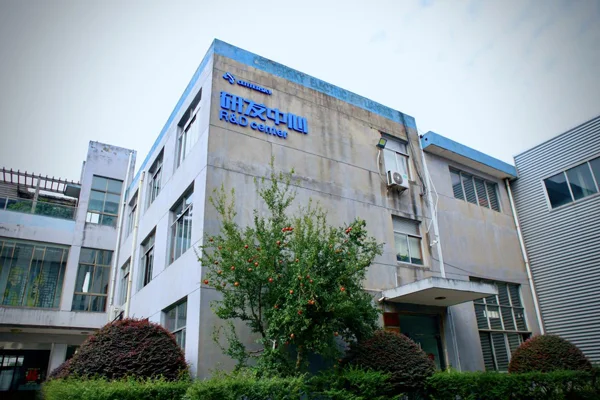
    The October breeze swept through the pomegranate tree in front of the R&D center, its branches laden with fruit, their burnt-yellow, translucent red skins enveloping the glittering seeds. Light and shadow flickered beneath the tree, perfectly reflecting CENTERSKY (EI LAMINATION) ‘s flourishing glory.

    CENTERSKY

    The story of this pomegranate tree dates back to 2003, the year CENTERSKY Electric moved into its brand-new factory. Mr. Xu, the general manager, said, “I hope that CENTERSKY will be like the pomegranate seeds, united and unyielding.” So, he planted a pomegranate tree, barely one meter tall, in the yard. In 2005, the tree bloomed for the first time. The vibrant orange-red petals, resplendent in the May sun, became a symbol of CENTERSKY’s early bloom.

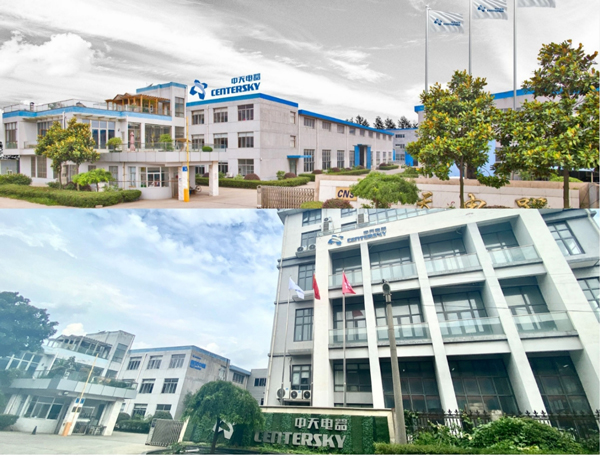
    Time passed, and in 2020, when CENTERSKY ‘s new office building rose from the grounds, no one was willing to part with the old tree, a treasure trove of memories and companionship. So, workers carefully transplanted it, along with its soil, to the green belt of the old office building, now located below the R&D center. From then on, a new story was added to the annual rings of this pomegranate tree.

    EI-LAMINATION
    Through the passage of seasons, the pomegranate tree bears witness to far more than this.
    Twenty-two years have flown by, and the once one-meter-tall pomegranate seedling is now nearly two stories tall. Its branches are twisted, its crown like an umbrella, its roots straining through the cracks in the concrete, yet it always produces flowers more vibrant than ever. It has witnessed every step of CENTERSKY’s transition from semi-manual and semi-automated production to intelligent manufacturing: its continuous expansion from Phase I to Phase IV; its international expansion and global success; and its unwavering dedication to the electrical industry over the past half century, as CENTERSKY employees have transformed from “followers” to “leaders,” carving their own unique mark in the
    tide of the time.

    EI-LAMINATIONs
    Now, the pomegranate tree in front of the R&D center has grown tall and majestic.
    Month by month, year by year, this pomegranate tree grows alongside those who pass beneath it! Apprentices entering the workplace shed their youthful innocence in the tree’s shadow, newly graduated interns take root and grow here, and once-young professionals shoulder the responsibilities of the department. Generations of CENTERSKY employees, their successes and failures, are all inextricably linked to the pomegranate tree and the splendor of CENTERSKY.

    silicon steel sheet
    Today, the first thing anyone sees when entering CENTERSKY(EI LAMINATION) is the pomegranate tree. It stands quietly at the entrance, silently accompanying the peaceful years here. The scars on its branches are medals of growth, and the pomegranate red on its branches is the background of its splendor. Beneath the pomegranate tree, CENTERSKY’s story continues. Its original aspiration of “dedication and dedication” and the soil that nurtures dreams are as fiery and bright as the pomegranate red!

  • Keeping going on the activity of Quality and Safety

    EI-lamination

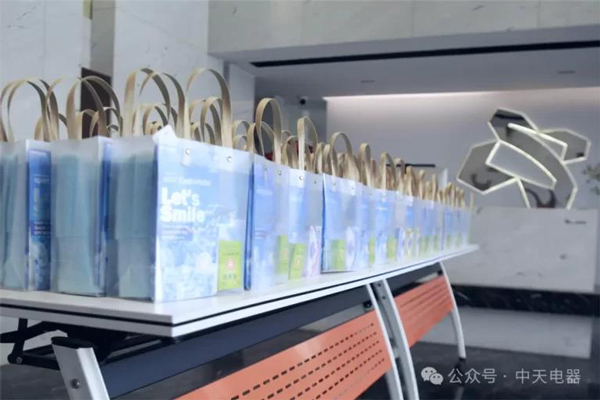
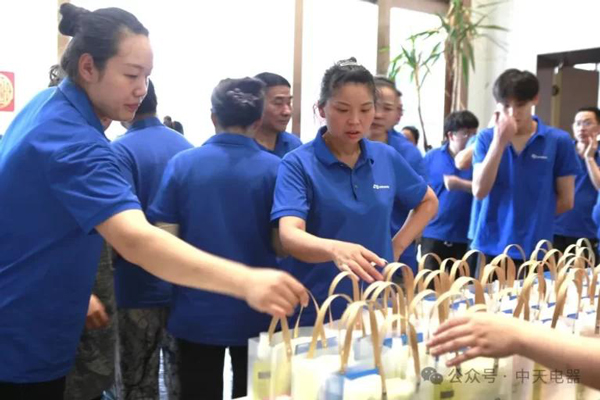
    As the scorching summer heat persisted, Jiangyin Centersky Electric Appliance Co., Ltd, manufacture of EI lamination, organized the “Summer Cooling Aid, Care for the Frontline” event on June 27 to distribute heatstroke prevention and cooling kits to frontline operators. This initiative reflects the company’s commitment to the “people-oriented” corporate philosophy and conveys its deep care for employees.

    CENTERSKY-EI-lamination

    In hot weather, during the production of EI lamination, frontline employees stick to their posts to ensure production, which is the cornerstone of the company’s development. Distributing heatstroke prevention gift packages is not only a way to thank everyone for their hard work, but also an important measure for the company to strengthen its safety production defense line. At 11 noon, Manager Zhu from the Human Resources Department, as a representative, personally handed over the company’s carefully prepared heatstroke prevention gift package to everyone. Manager Zhu stated that in the future, the company will continue to optimize the employee welfare system, so that every

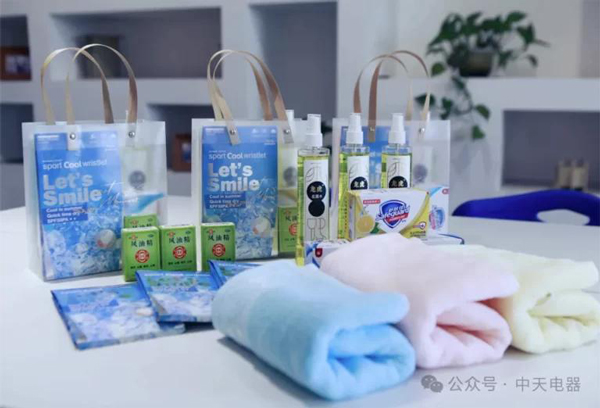
    CENTERSKY person can feel the warmth of ‘home’. ”The heatstroke prevention and cooling gift package distributed this time is centered around “practicality and health”, containing items such as ice sleeves, towels, soap, floral water, and essential oils. In addition, the company has specially purchased equipment such as air coolers and ice makers in bulk for frontline operation positions to ensure all-weather heatstroke prevention needs. In the future, we will dynamically adjust our security measures based on temperature changes, provide continuous care, and jointly build a happy sky.

    EI-laminations

    Jiangyin Centersky Electric Appliance Co., Ltd always puts the well-being of its employees first, and in recent years, it has improved the working environment and ensured the physical and mental health of its employees from multiple dimensions. The series of caring mechanism activities such as “Summer Coolness” will continue to be normalized, promoting the common growth of employees and enterprises, and injecting humanistic warmth into building a benchmark enterprise in the industry.